
Swimming competitions rely on trained officials. At Salisbury Stingrays, our officials are volunteers who help make it possible for swimmers to compete safely, fairly and within the rules.
Our officials include parents, guardians, grandparents, senior swimmers and former swimming parents who continue to support the club. You do not need previous experience to get involved, and the club will support you through the training process.
Who can train?
Anyone aged 15 or over can begin training as a swimming official.
No previous experience is necessary.
Why it matters
Licensed meets need qualified officials.
Without them, clubs cannot run competitions or properly support swimmers at away meets.
How to start
Our Officials Coordinator is Helen Iveson.
For more information, please contact her at
[email protected].
Who are officials?
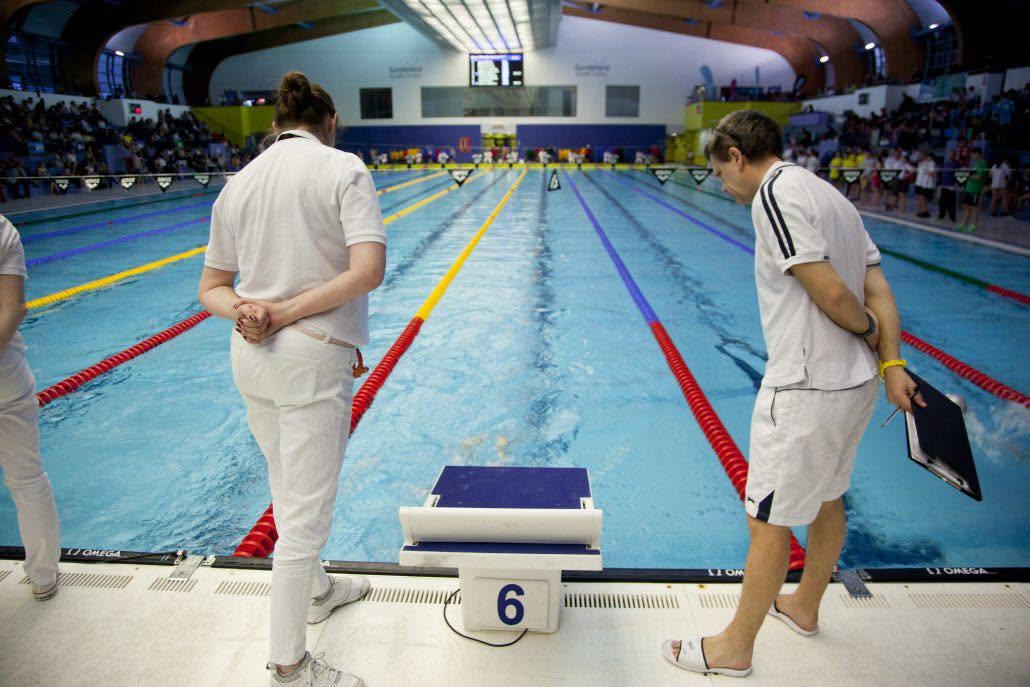
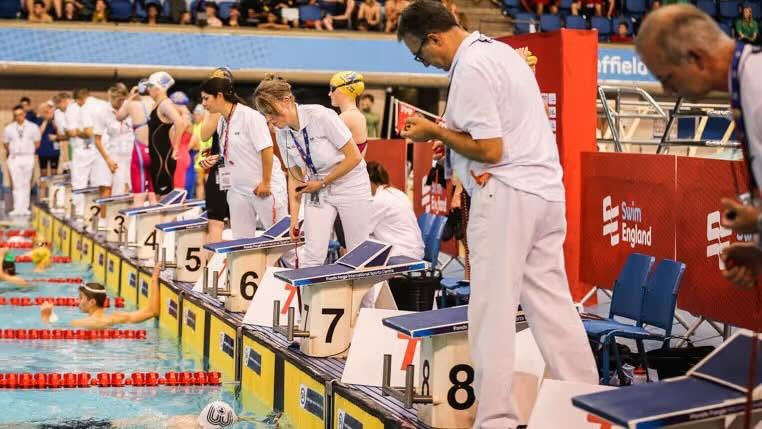
You may have noticed that there are always plenty of people dressed in white, often carrying clipboards or stopwatches, at swimming competitions. These are the officials.
There are several levels of officiating, beginning with Judge Level 1 (J1) and progressing through to referee.
J1 officials work at both ends of the pool. At the finish end, they act as timekeepers by operating a stopwatch and the electronic timing system, while also checking that swimmers start their races correctly. Officials at the turning end observe turns and ensure that swimmers comply with the competition rules throughout the race.
It might sound like a lot to learn, but the role is much more straightforward than most people expect. Full training and support are provided, and you'll quickly gain confidence through practical experience at competitions.
Why do we need officials?
Every licensed swimming competition must have a sufficient number of qualified officials to oversee the event and ensure that races are conducted fairly and in accordance with the rules. Without enough qualified officials, a competition cannot be licensed or take place.
For our own open meets, Salisbury Stingrays must therefore provide a full team of qualified officials. In addition, when we attend away galas, county championships and regional competitions, clubs are expected to provide officials in proportion to the number of swimmers they enter – typically around one official for every ten swimmers.
Our officials play a vital role in the success of the club. By volunteering as an official, you help ensure that our swimmers have the opportunity to compete, develop their skills and enjoy the sport they work so hard to train for.
How to become an official
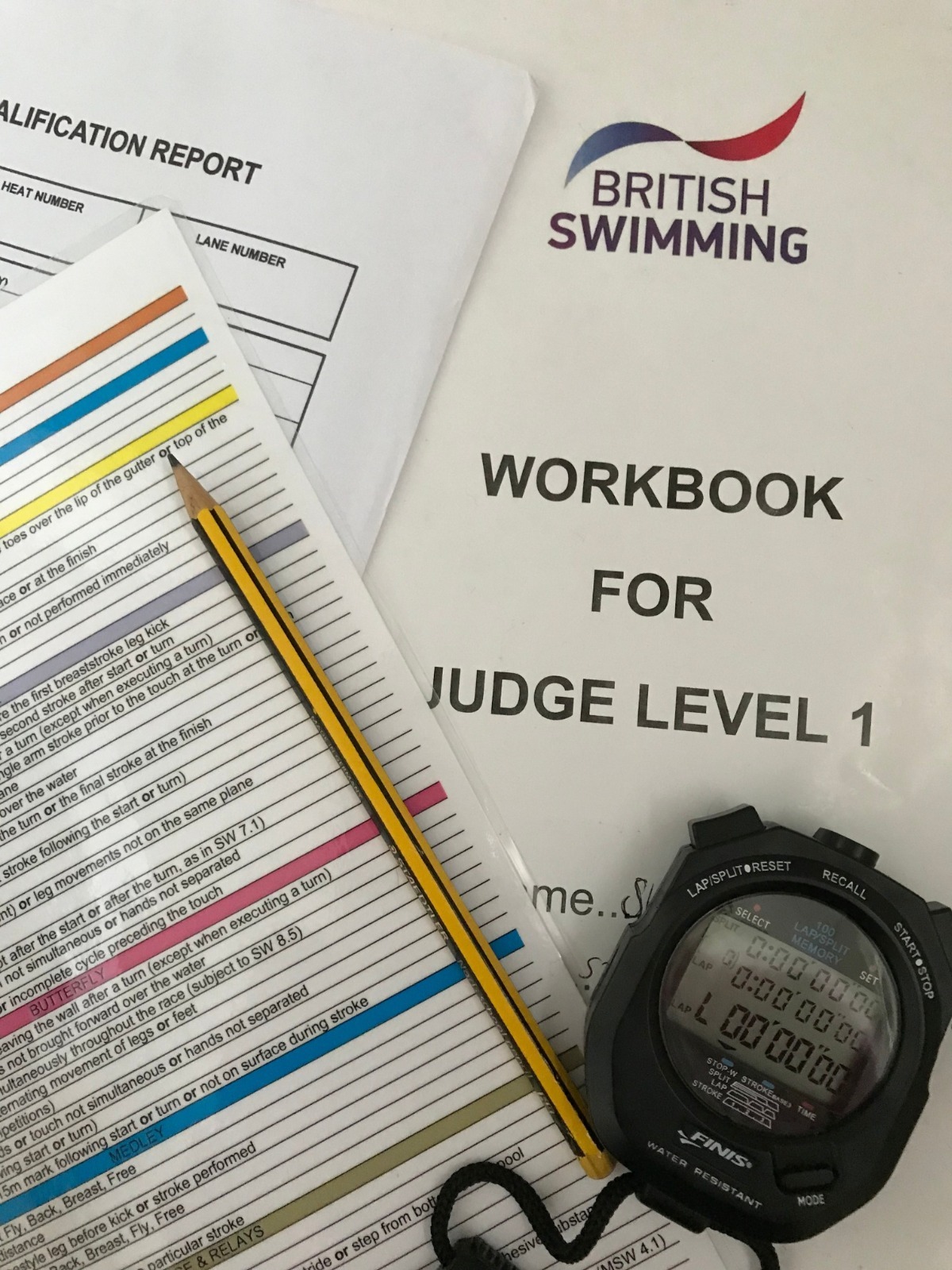
Training for Judge Level 1 is now available online, followed by practical poolside experience with support from a mentor. The process is straightforward, and new officials are supported throughout.
Training process
- Complete the online training modules.
- Volunteer as a trainee official at meets and complete mentored poolside experience.
- Have your competencies signed off as you gain experience.
- Keep in contact with your mentor so they can complete your final sign-off.
- Once complete, you will be recognised as a qualified official.
Benefits of becoming an official
- You learn more about your swimmer’s sport.
- You help make competitions possible for the whole club.
- You get a great poolside view of the racing.
- You meet other volunteers and become more involved in the swimming community.
- You gain a recognised volunteering role that can be useful for your CV.
- You support swimmers by helping competitions run fairly and smoothly.
- You normally get fed at events!
- You are often presented with a warm bottle of questionable wine as a thank you!
officials, swimming officials, swim officials, swimming volunteer, volunteer, timekeeper, judge, referee, Swim England officials, officiating, swimming competitions, Wiltshire swimming, Salisbury Stingrays, Salisbury swimming club